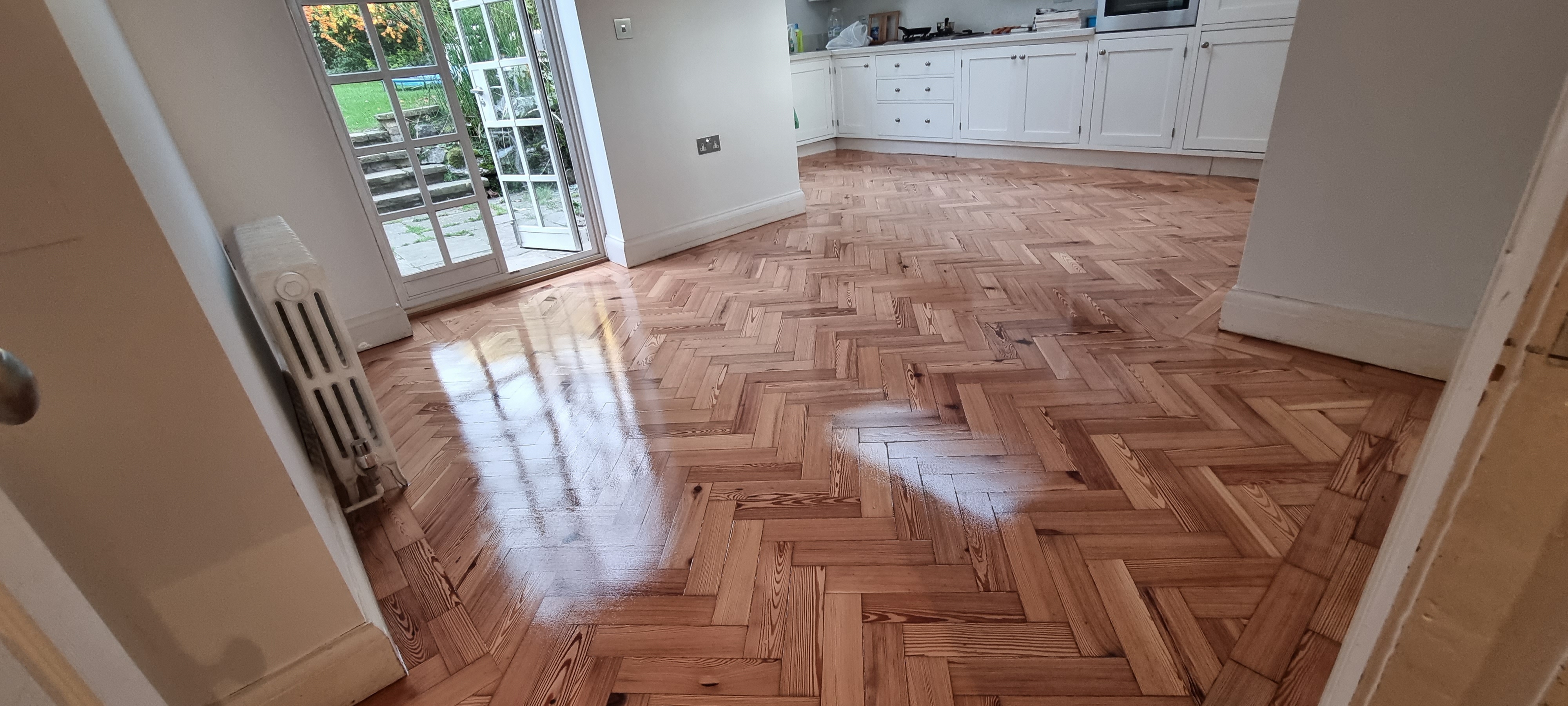
This Hampstead Victorian property had beautiful original parquet flooring that had deteriorated significantly over decades of use. The client wanted to restore the floor to its former quality while maintaining the character of the period property. We carried out comprehensive sanding and lacquering to bring back the natural grain and colour of the wood.
Work carried out
- Full floor sanding using industrial equipment
- Dust containment and air filtration throughout the property
- Gap filling and minor repairs to damaged boards
- Multiple sanding passes with progressive grit papers
- Hand sanding of edges and difficult areas
- Application of water-based lacquer in two coats
- Final inspection and touch-up work
About the project
The parquet in this Hampstead home was original to the property, laid over 120 years ago. The surface had significant wear, with patchy lacquer and accumulated dirt in the grain. Some boards showed minor movement and a handful had minor cup or cupping. We needed to sand back to bare wood without damaging the relatively thin top layer that defines parquet pieces. The challenge was balancing thorough restoration with preserving the integrity of period flooring, particularly where boards had become slightly uneven.
We approached the job in stages. First, we inspected the floor thoroughly to identify problem areas and determine the right grit sequence. The main sanding took five days using our dust containment system, which kept airborne particles to a minimum despite working across multiple rooms. We used 36, 60, 80, and 120 grit papers in sequence, checking progress regularly. The finishing lacquer is water-based rather than solvent, which meant faster drying times and a cleaner process overall. The client was able to return to normal use within 48 hours of completion.
About our Hampstead service
Hampstead has some of London's finest period properties, and we work on many of them. Victorian and Edwardian homes dominate the area, with solid wood flooring that was standard when these properties were built. Parquet is common in reception rooms and studies, while many hallways and bedrooms feature traditional floorboards. Properties here are typically well-maintained and cared for, which means the underlying wood is usually in decent condition once the surface is restored. We also see newer properties in the area, where engineered flooring and modern solid boards require different sanding techniques and sometimes alternative finishes.
The neighbourhood presents specific working conditions we've learned to manage carefully. Many properties are multi-storey townhouses with living spaces directly above and adjacent neighbours close by. Dust control and noise management are essential, which is why we always use dust containment systems and avoid work before 8am or after 5pm. Access can be restricted, and parking is competitive, so we plan jobs around these constraints. The quality expectations are high here, and rightfully so. We treat each project as a restoration job first and a commercial job second.
Frequently asked questions
How much does floor sanding typically cost?
Sanding costs usually fall between £25 and £45 per square metre, depending on the floor condition, wood type, and finish specification. A 40 square metre room might therefore cost between £1,000 and £1,800 for sanding alone. Lacquering adds £15 to £20 per square metre on top. Parquet and engineered floors sometimes cost slightly less per square metre than solid hardwood because they require more careful technique but less aggressive sanding.
How long does the sanding process take?
A typical domestic floor of 50 square metres takes between 5 and 7 working days to sand and finish completely. This accounts for sanding work, dust collection, edge work, and application of multiple lacquer coats. Drying time between coats means you cannot rush the process safely. You can walk on the floor after 48 hours, but we recommend waiting a full week before moving furniture back or exposing it to heavy use.
Is the dust-free process really dust-free?
Our dust containment system captures approximately 99 percent of particles at source using industrial-grade vacuums attached to the sanding equipment. Some fine dust does travel on air currents, which is why we use HEPA filtration and seal doorways. It's not completely dust-free, but the difference between contained and uncontained sanding is substantial. Your home remains liveable during the work, and cleaning afterwards is manageable rather than overwhelming.