Monday - Friday 07:30 - 17:30, Saturday 07:30 - 16:00
St Luke Church Floor Sanding in Hampstead
Back to Portfolio
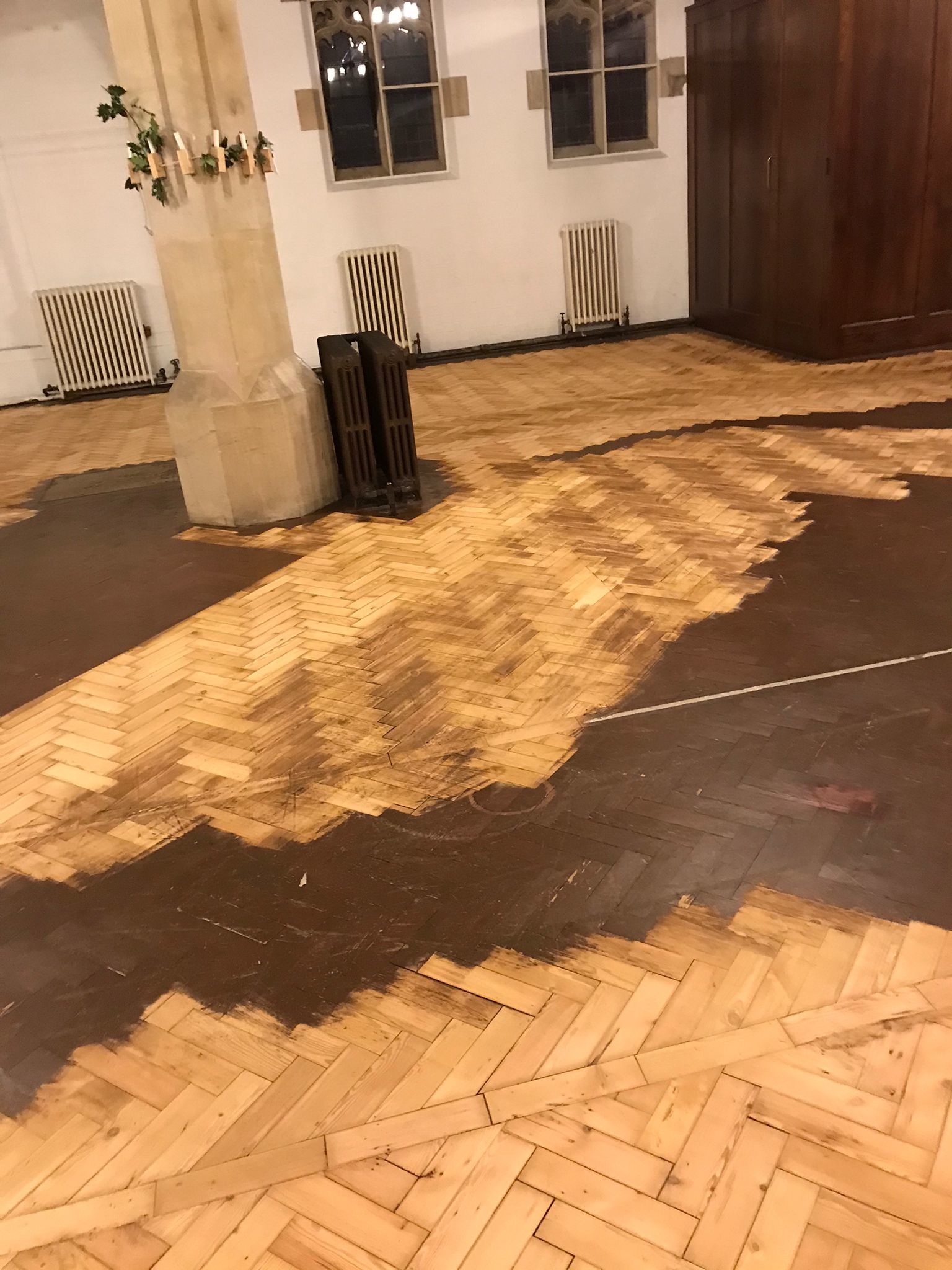


St Luke Church Floor Sanding in Hampstead
St Luke Church in Hampstead required comprehensive floor sanding across its main nave and side aisles. The original Victorian timber flooring had deteriorated significantly, with ingrained dirt, patchy finishes, and surface damage accumulated over decades of foot traffic. We stripped back the entire floor to bare wood, then refinished it with high-quality sealant to restore its original character while ensuring durability for continued use.
Work carried out
- Multi-stage sanding with progressive grit papers
- Dust containment and extraction throughout
- Hand sanding of edges and detailed areas
- Wood repair and filling of minor defects
- Priming and sealing with an ecclesiastical-grade finish
- Buffing and final inspection
About the project
St. Luke Church presented a particular set of challenges typical of Victorian ecclesiastical buildings. The floor comprised narrow strip pine with some areas of block parquet in the chancel. Years of polishing with different products had created uneven colour and adhesion, with patches where the seal had broken down entirely. The church remained in active use during the work, requiring us to section off areas and work carefully around the existing furnishings, including the organ pipes and altar fittings that needed protection from dust and debris.
Our approach involved starting with coarse sanding to remove the old finish and level out variations in the surface. We worked methodically through progressive grits to achieve a smooth, even substrate. The perimeter and awkward corners around columns required hand sanding to avoid damage to the plasterwork and stone. Once the bare wood was clean, we applied a specialist sealant formulated for high-traffic areas in public buildings. This product offers enhanced durability while allowing the wood to age naturally, which was important for maintaining the church's aesthetic. The entire process took ten working days, with careful dust management ensuring the building remained usable for services by the afternoon of each working day.
About our Hampstead service
Hampstead contains some of London's most distinctive period properties, from grand Victorian villas and Edwardian townhouses to smaller cottages and converted mews properties. The area has seen significant growth in recent renovation work, yet many homes still retain their original timber flooring. We work regularly with period properties in Hampstead, where floor condition varies widely depending on maintenance history and previous treatments. Some clients uncover beautiful original timber under tired carpets or laminate, whilst others need careful restoration of damaged boards or careful patching where rot has been addressed.
Church and institutional buildings in Hampstead represent a particular specialism for us. These spaces require different thinking than residential work, partly because of the public liability and safety considerations, partly because the floor specifications need to withstand higher traffic volumes and more varied environmental conditions. We've sanded floors in several Hampstead community buildings and worked with architects and surveyors on specification requirements. Most Hampstead properties contain either Victorian strip flooring, Edwardian parquet, or later additions in softwood or hardwood plank. Each type responds differently to sanding and finishing, and we adjust our grit progression and sealant selection accordingly.
Frequently asked questions
How much does floor sanding cost?
Sanding costs typically range from £25 to £45 per square metre depending on the floor condition, wood type, and finish specification. Heavily damaged floors or specialist finishes cost more. We provide a detailed survey and quotation before any work begins, with no hidden costs.
How long does the sanding process take?
A typical domestic floor sands in three to five working days depending on size and condition. Large or damaged floors may require longer. We'll provide a realistic timeline during the survey visit and keep you updated on progress.
Is the dust-free sanding process really dust-free?
Our dust extraction removes around 95% of particles during sanding. Fine dust settles afterward, which is why we recommend removing soft furnishings and thoroughly cleaning on completion. We contain the work area and use HEPA-filtered equipment to minimise spread to adjacent rooms.
Project Gallery